


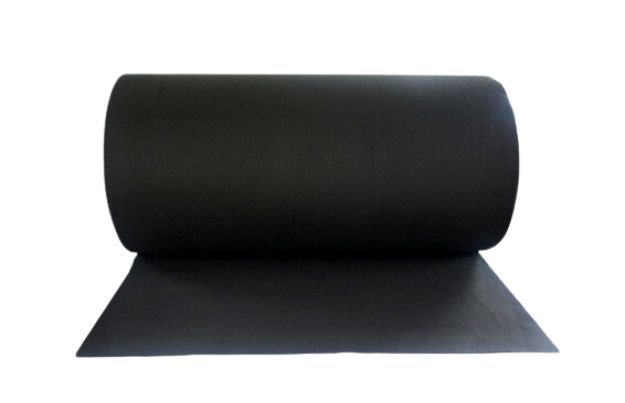
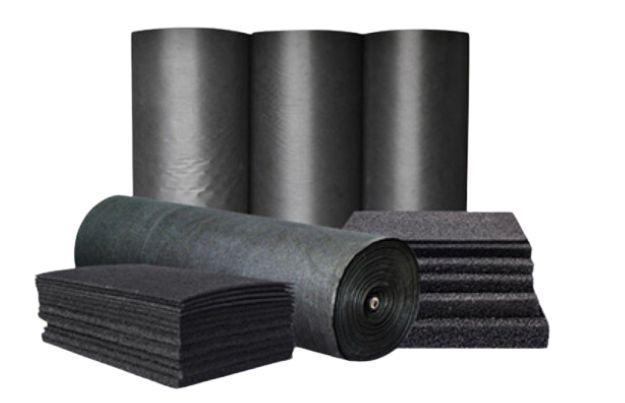
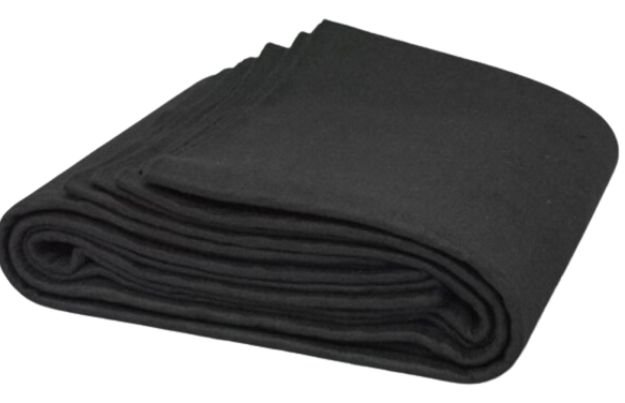
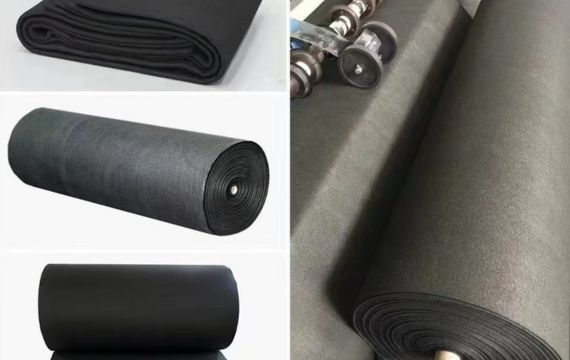
Activated Carbon Fiber Felt
Activated carbon fiber felt is generally made of viscose fiber, polyacrylonitrile base and asphalt base as raw materials
- Air purification
- Water purification
- Solvent recovery
- Precious metal extraction or recovery
- The adsorption capacity is large and the adsorption speed is fast
ACF Introduction
Traditionally, activated carbon (GAC) is available in powdered and granular forms, Over the past two decades, countries such as the US, Japan and Russia have successively developed a third form of activated carbon known as activated carbon fibers (ACF). As activated carbon fibers are covered with micropores and can be further processed into various forms of felt and fabric, they offer advantages over traditional granular carbon, including faster adsorption and desorption rates, as well as more convenient operation and maintenance.
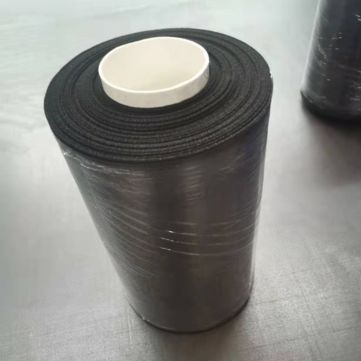
According to the shape, the ACF can be sorted as ACF felt, ACF cloth and ACF silk; According to the materials, it can be sorted as viscose ACF, polyacrylonitrile ACF,phenolaldehyde resin ACF, and pitch ACF. The main product of our company is viscose-based ACF.
- Technical Data Sheet
| Type | ACF 1000 | ACF 1300 | ACF 1500 | ACF 1600 | ACF 2000 |
| BET (㎡/g) | 900-1000 | 1150-1250 | 1300-1400 | 1450-1550 | 1800-2000 |
| Static benzene absorption capacity(wt%) | 30-35 | 38-43 | 45-50 | 53-58 | 70-80 |
| Dynamic benzene absorption capacity(wt%) | ≥27 | ≥32 | ≥40 | ≥47 | ≥65 |
| Iodine absorption value(mg/g) | 850-900 | 1100-1200 | 1300-1400 | 1400-1500 | 1700-1800 |
| Methylene blue (ml/g) | 150 | 180 | 220 | 250 | 300 |
| Pore volume(ml/g) | 0.8-1.2 | ||||
| Average pore size(A°) | 17-20 | ||||
| PH value | 5-7 | ||||
| Kindling point(℃) | >500 | ||||


ACF Characteristics
1 High adsorption capacity
Activated carbon fibers have an adsorption capacity for organic gases and malodorous substances (such as n-butyl mercaptan) that is several to over ten times greater than that of granular activated carbon (GAC). They also exhibit good adsorption capacity for inorganic gases. Their adsorption capacity for inorganic substances, dyes, organic compounds and precious metals in aqueous solutions is 5–6 times higher than that of GAC. It also possesses excellent adsorption capacity for microorganisms and bacteria (for example, the adsorption rate for Escherichia coli can reach 94–99%). Its adsorption capacity for low-concentration adsorbates is particularly outstanding. For instance, it can maintain a high adsorption capacity even when the adsorbate concentration is in the ppm range, whereas adsorption materials such as GAC often exhibit reduced adsorption capacity at low concentrations.
2 Rapid adsorption
The adsorption rate of gaseous pollutants from the gas phase is extremely rapid, and adsorption equilibrium with liquids can also be reached very quickly; its adsorption rate is tens to hundreds of times higher than that of GAC.
3 Convenient and easy regeneration
ACF retains its original adsorption capacity even after repeated cycles of adsorption and desorption. For example, regenerating ACF with steam or hot air at 120–150 °C for 10–30 minutes is sufficient to achieve complete desorption of common VOCs.
4 Being a best heat resisting property
CD Graphite Company’s ACF can withstand temperatures of over 1000 °C in inert gases, and its flash point in air is over 500 °C.
5 Our ACF is resistant to acids and alkalis, and possesses good electrical conductivity and chemical stability.
6 The total ash content is very low.
7 It has good formability and can be easily processed into felt, yarn, fabric, cloth, paper and other forms.