Graphite is one of several allotropes of elemental carbon and of the few elements that occur in nature in its native form. With a high electrical and thermal conductivity, excellent thermal stability and lubricity, graphite combines both metallic and non-metallic properties, making it suitable for a wide range of industrial applications. The word graphite is derived from the Greek word graphein for writing, reflecting its long-standing use in pencil today, graphite as an industrial mineral commodity is used across a wide array of industries such as refractories, foundries, steel-making and automotive as well as specialty applications in the nuclear industry, powder metallurgy, fuel cells and flame retardants.
The graphite industry is likely to undergo significant market changes in the coming decades, as the booming lithium-ion battery industry is expected to substantially increase demand for graphite. The steel industry has traditionally been the main driver for the consumption of natural graphite through its use of refractory products. While global graphite demand is forecast to grow at a rate of approximately 7% every year, traditional applications are expected to lose market share to battery applications, where graphite is used as the main anode material. Depending on economic factors such as market penetration and uptake, robust growth for the battery sector is forecast to drive demand, as an increasing number of countries around the world are stepping up their efforts to promote the development and utilization of renewable energy in a move towards a lower emissions future in the transport and energy sectors. Natural graphite competes with synthetic graphite for market share in battery applications, with the choices of material down to price, availability and customer requirements.
China remains the center of the graphite industry as the biggest producer, consumer and exporter world-wide. The lithium-ion manufacturing chain is dominated by China, with the majority of processing of natural flake graphite into battery grade for use in the battery sector carried out within the country. China is also the largest manufacturer of anode material, battery components and lithium-ion batteries.
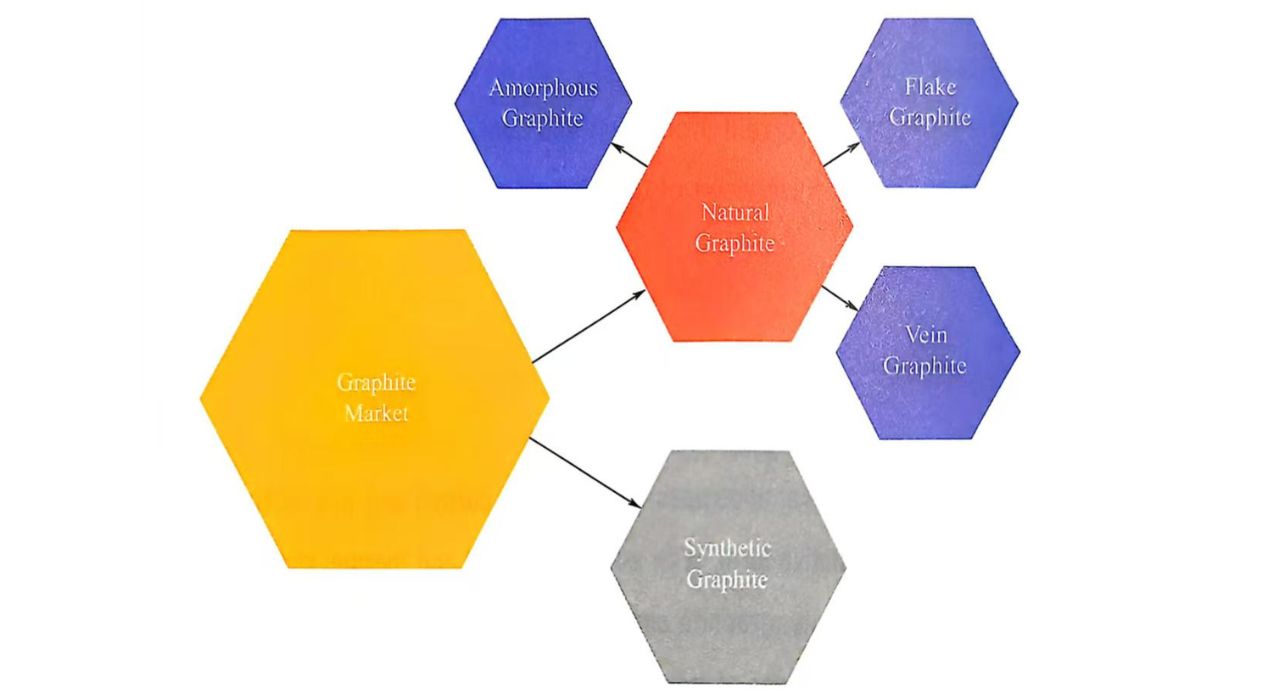
Graphite supply to the market consists of natural graphite and synthetic graphite. Although both are called graphite, they are essentially two different commodities with unique properties. Natural graphite and synthetic graphite each have their own applications and generally do not compete for market share. In applications where both synthetic and natural graphite can be used, the choice of material comes down to customer specifications, availability and cost. The main markets for natural graphite are linked to the steel industry; the largest end use is the refractory industry, accounting for almost half of global consumption. Demand is expected to increase over the years, as consumption as anode material in lithium-ion batteries is projected to surge in line with the uptake of electric vehicles and lithium-ion battery applications. In these applications, natural graphite currently competes with synthetic graphite for market share, and a mix of both material in battery applications is common. Understanding the difference between natural and synthetic graphite and their respective characteristics and applications is imperative for the overall understanding of the graphite market.